AI Won’t Fix Your CRM (But Better Data Integration Might)
Clint
is a marketing entrepreneur with over 25 years of experience and has successfully grown several 7 to 8-figure businesses. He is also skilled in using NetSuite and Salesforce. Currently, running Cazoomi for over 17 years and based in the Philippines.
7 minute read
AI Won’t Fix Your CRM (But This Might)
Marketing says the campaign worked.
Sales says none of the leads are responding.
Both teams are looking at dashboards. Both believe their data is correct.
And increasingly someone in the room says:
“Maybe we just need AI.”
It’s a popular answer right now.
AI promises to analyze your data, score leads, predict behavior, and automate outreach. CRM vendors are rushing to add AI features everywhere — dashboards, assistants, automated emails, predictive scoring.
But there’s a problem almost nobody talks about.
AI assumes your data is already connected and trustworthy.
In many companies, it isn’t.
After working with Salesforce integrations for years, we see the same pattern again and again. Marketing data lives in one place. CRM data lives in another. And the two systems only partially understand each other.
Marketing tools track things like email opens, clicks, campaign sends, segmentation, and automation flows.
CRMs track something very different. They track people, accounts, sales activity, pipeline, and opportunities.
Both systems are technically correct. They’re just answering different questions.
When these systems are loosely connected, the result looks something like this.
Marketing reports that a campaign generated engagement.
Sales opens the CRM and sees nothing useful.
That’s when the argument starts.
AI tools are very good at analyzing patterns in data. But they depend on something critical.
Clean, structured, connected information.
If the systems feeding that AI are disconnected, the output will be misleading. Imagine asking an AI assistant a simple question:
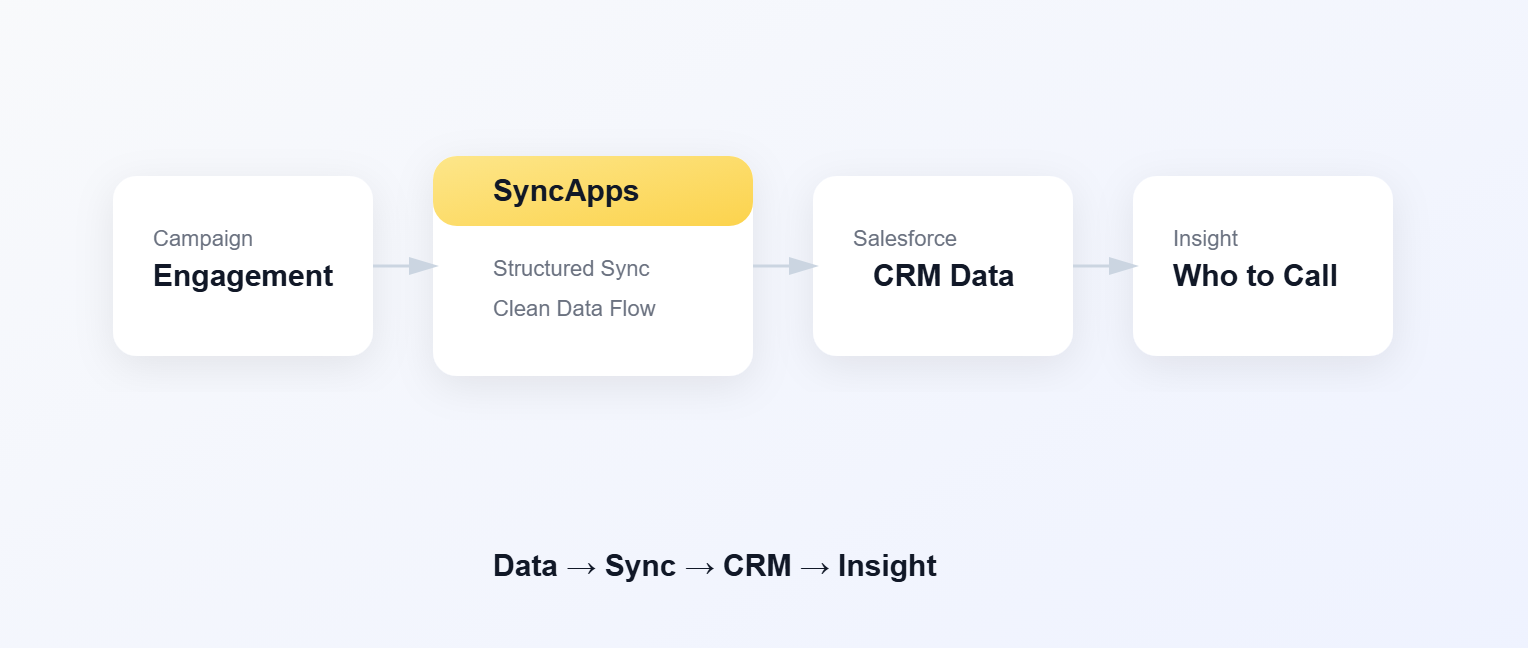
“Which leads should our sales team call today?”
If your marketing engagement lives in Mailchimp and your contact records live in Salesforce — and the two systems don’t properly align campaign activity with contacts — the AI simply can’t answer that question accurately.
It will still give you an answer.
But it might be wrong.
That’s not an AI problem.
It’s a data architecture problem.
One of the biggest sources of confusion comes from something surprisingly simple: the word campaign.
Marketing tools and CRMs use that word very differently.
In marketing platforms like Mailchimp, a campaign usually means a specific email send. In Salesforce, a campaign represents a group of people connected to a marketing effort.
Both definitions make sense inside their own systems.
But when those systems connect, the difference matters. If campaign activity isn’t tracked correctly, the CRM may know who exists in a marketing list but not who actually received or engaged with a specific email.
That distinction is the difference between generic reporting and actionable insight.
This is where the conversation usually lands.
Marketing sends a campaign to thousands of contacts.
That’s the moment where integration either works — or fails.
If engagement data lives only in the marketing system, sales teams never see it. If engagement data isn’t tied to the right contacts in the CRM, sales teams can’t trust it. And if campaign history isn’t preserved correctly, reporting becomes misleading.
No AI tool can solve that if the underlying systems don’t align.
Before adding AI, companies need something far more basic.
Clear relationships between marketing activity and CRM records.
CRM contacts must map directly to marketing contacts. Campaign events must be tracked correctly. Engagement must attach to the right person and campaign. And systems must stay synchronized over time.
When those conditions exist, the CRM becomes something much more powerful. It stops being a static database and becomes a living history of marketing and sales interactions.
At that point, AI can actually help.
But without that foundation, AI is guessing.
Ten years ago most companies had two core systems.
A CRM.
An email platform.
Today the average stack looks very different. Many teams run a CRM, marketing automation platform, webinar tools, event platforms, analytics systems, enrichment tools, and advertising platforms — all collecting valuable data.
Each system is good at what it does.
But unless those systems synchronize properly, the CRM slowly loses visibility into what marketing is actually doing.
That’s when teams start exporting spreadsheets.
Or manually reconciling reports.
Or arguing in meetings about whose numbers are correct.
At Cazoomi we see this play out all the time when companies start connecting Salesforce with marketing platforms like Mailchimp, HubSpot, ActiveCampaign or Constant Contact. The tools themselves usually work fine. The problem isn’t the technology. It’s that marketing events, campaign activity, and CRM records aren’t tied together in a way that sales teams can actually use.
In most cases the solution isn’t another marketing tool or another AI assistant.
It’s the integration layer connecting the systems you already have.
A good integration layer does three things. It respects the CRM as the system of record. Your CRM should control contacts, segmentation, and campaign structure.
It allows marketing platforms to do what they’re good at. Email sends, automation, and engagement tracking should happen where they belong.
And it synchronizes engagement data back to the correct CRM records.
When that works correctly, the CRM becomes the place where sales and marketing finally see the same picture.
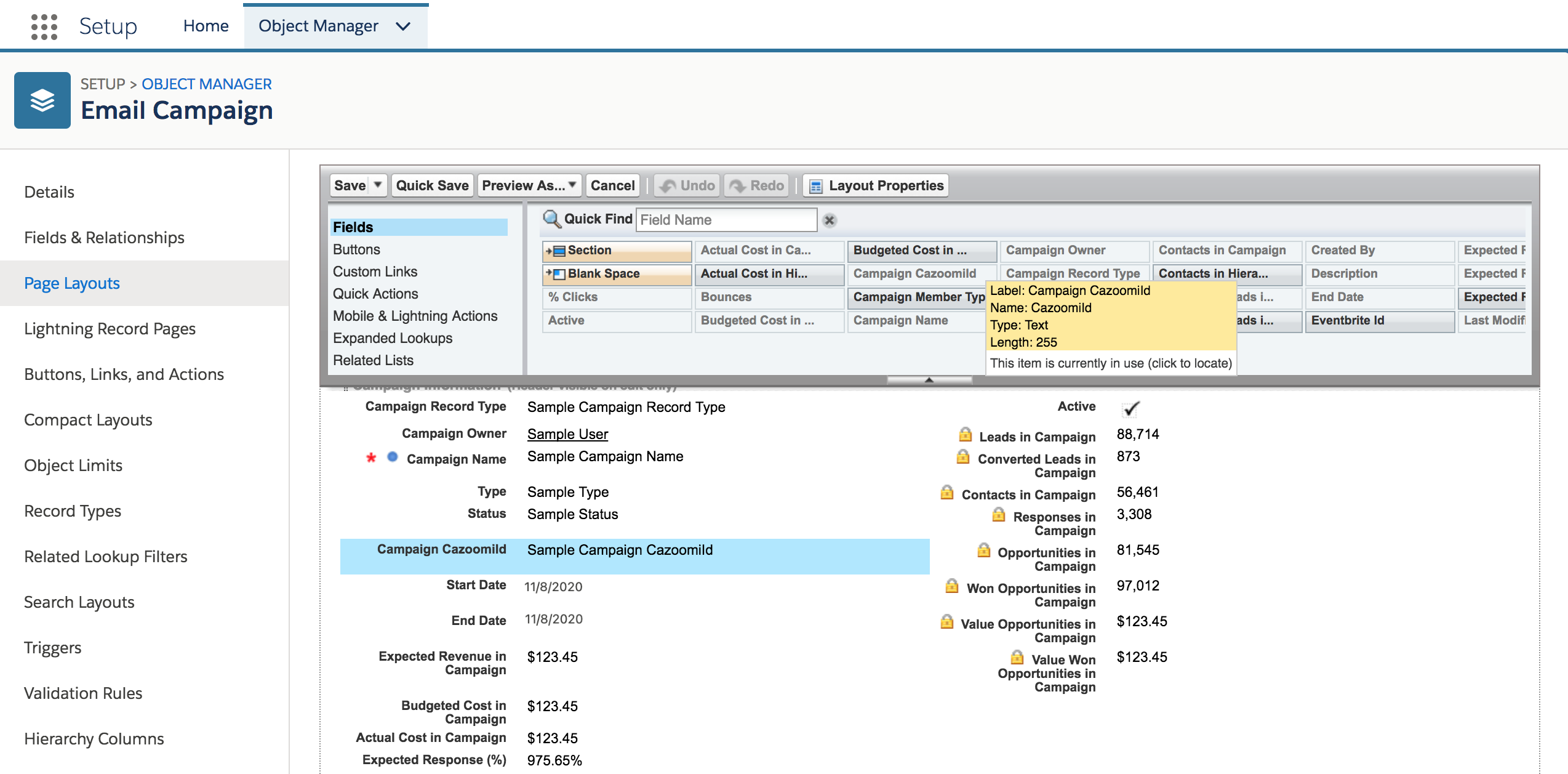
For example, when email engagement is written back to Salesforce Campaign Members, sales teams can see exactly who received and interacted with marketing outreach. If your Salesforce layouts aren’t configured to display those metrics, they may be syncing but simply not visible.
Another question we hear often is why new Salesforce Campaigns sometimes appear when emails are sent from Mailchimp.
This happens because marketing platforms treat campaigns as individual email sends, while Salesforce uses campaigns to organize marketing audiences. To preserve accurate reporting, integrations often create a Salesforce Campaign for each email send so engagement can be tracked properly at the Campaign Member level.
Once systems are aligned, AI finally starts to make sense.
At that point AI can help answer questions like which contacts are most engaged with recent campaigns, which leads resemble past customers, or which accounts are showing early buying signals.
But notice what those questions depend on.
Accurate engagement data tied to real contacts.
Without that structure, AI can’t produce meaningful insights.
It can only produce interesting guesses.
Most companies don’t have an AI problem.
They have a visibility problem.
The goal isn’t prettier dashboards.
It isn’t even better analytics.
The real goal is something much simpler.
Sales teams need to know who to call.
And marketing teams need to know whether their campaigns actually influenced revenue.
Those questions are impossible to answer if engagement data lives outside the CRM.
But when the systems are connected correctly, those answers become obvious.
Right now companies are racing to adopt AI tools. That’s understandable.
But AI will only amplify whatever system it sits on top of.
If your marketing and CRM data are fragmented, AI will amplify that fragmentation.
If your systems are aligned, AI will amplify clarity.
That difference doesn’t come from AI.
It comes from integration.
Integration isn’t flashy. It doesn’t produce headlines or demos that impress executives.
But it quietly solves the problem that frustrates teams every day.
Data living in the wrong place.
When the right data lands on the right CRM records, something surprising happens.
Sales stops questioning marketing’s reports.
Marketing stops guessing what sales needs.
And the question “Who should I call?” finally has a clear answer.
For reference, email marketing still delivers one of the highest returns on investment in digital marketing according to research from HubSpot: https://www.hubspot.com/marketing-statistics