If you’ve been in the NetSuite ecosystem long enough, you already know this:No single integration platform does everything well.
Back in 2006–2009, when both Celigo and Cazoomi were just getting started, it became clear that NetSuite users needed two very different types of automation:
Deep ERP workflows across Finance, Inventory, and Order ManagementMarketing + CRM automation across email platforms and sales systems
Celigo built the first category.companies still use both — because their NetSuite needs aren’t one-size-fits-all.
Here’s the updated 2026 comparison, without the marketing fluff.
Where Celigo Shines (Finance, eCommerce, Inventory) Celigo is excellent when your core business runs inside NetSuite:
Celigo Strengths
Financials automation: Invoices, credit memos, journal entries, A/R flowsInventory + fulfillment: Item Fulfillments, Purchase Orders, Quantity UpdateseCommerce connectors: Shopify, Magento, Amazon, BigCommerceComplex data mapping: Custom records, saved searches, ERP-specific schemasERP → CRM alignment: Opportunity, Order, and Customer balance automation
Who it’s best for Companies whose operations start and end inside NetSuite ERP — including eCommerce brands, wholesale distributors, and finance-led organizations.
Where users hit limits
Marketing automation is not their focus
CRM → email list syncs can be too rigid
Higher cost because you pay per flow / volume
Many SMBs don’t use the finance modules → but still pay ERP-level pricing
This is why some companies use Celigo for ERP but still roll out SyncApps, by Cazoomi, for marketing.
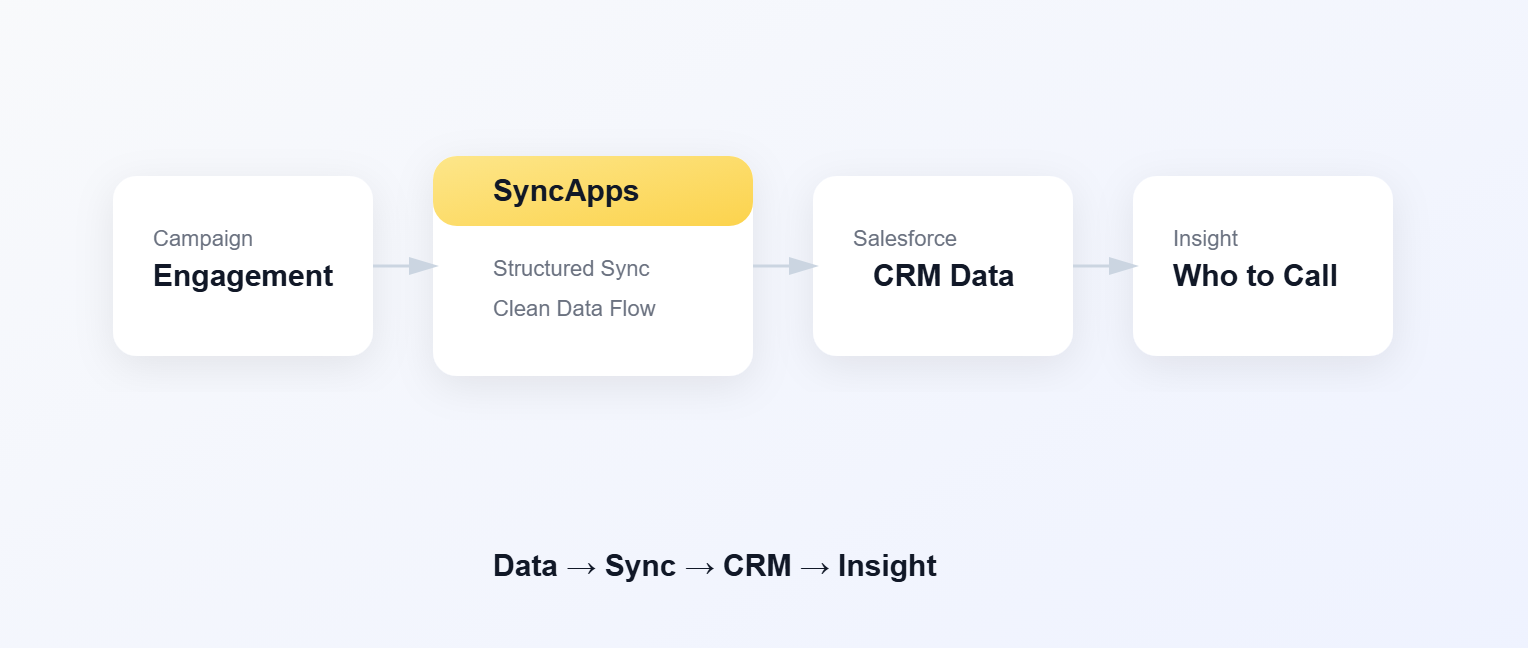
Where SyncApps Shines (Marketing + CRM Automation) SyncApps takes the opposite approach:focus deeply on the sales → marketing → customer lifecycle , not ERP back-office complexity.
SyncApps Strengths
NetSuite → Mailchimp / Constant Contact / ActiveCampaign / Klaviyo / HubSpot Bidirectional CRM sync: Customers, Contacts, Subsidiaries, Custom FieldsSegmentation automation: Saved Searches → Lists, Groups, TagsCampaign insights: NetSuite tracking + revenue attributionFlat pricing: You’re not charged per flow, per connector, or per record volumeGuaranteed daily sync stability: Built for marketers, not accounts payable
Who it’s best for Any NetSuite user whose growth depends on marketing automation, CRM alignment, donor engagement, or email-based lifecycle campaigns.
Where SyncApps stops by design
No financials
No inventory flows
No eCommerce order logic
No deep logistics automation
Because that’s Celigo’s job — not ours.
Why Many NetSuite Teams Use Both This is the part most comparison posts never say:
Celigo + SyncApps complement each other. Not compete.
Examples:
A retailer uses Celigo for Shopify → NetSuite item/fulfillment flows, and SyncApps for Mailchimp + CRM-based segmentation.
A nonprofit runs NetSuite financials through Celigo but uses SyncApps to sync supporters into Constant Contact and automate donor journeys.
A B2B company uses Celigo for ERP → Salesforce Quotes, but SyncApps to sync marketing lists, groups, and campaign ROI.
If you don’t use the finance part of Celigo, SyncApps is dramatically simpler and significantly less expensive.
2025 Comparison Table Feature Category Celigo SyncApps NetSuite Financials ✅ Deep ❌ Not built for this Inventory / Fulfillment ✅ Strong ❌ Not supported eCommerce connectors ✅ Wide ❌ Not applicable Marketing Automation ⚠️ Basic ✅ Deep + Specialized CRM + Segmentation ⚠️ Limited ✅ Full mapping + saved search logic Pricing Model Per flow + scaling Flat One Plan Best for ERP-heavy orgs Marketing-driven orgs Years in NetSuite Ecosystem Since ~2006 Since ~2009
Different strengths.
What NetSuite Teams Want in 202 6Based on customer behavior across 2023–2025:
1. Reduced integration cost (per-flow pricing fatigue)
Teams are cutting operational overhead and moving away from “metered” integration models.
2. Marketing automation is now mission-critical
Email, CRM, lifecycle automation, donor journeys, campaign attribution — these sit outside ERP and need a dedicated integration.
3. ERP + Marketing stacks are diverging
Finance teams choose Celigo.
If You’re Comparing the Two Today Ask one question:
Is your integration ERP-first or Marketing-first?
If it’s ERP → You probably need Celigo.
Ready to Automate NetSuite Marketing Without ERP Complexity?
SyncApps automates NetSuite marketing integrations with:
Real-time segmentation from Saved Searches
Bidirectional syncing for Contacts, Customers, and Custom Fields
Support for Mailchimp, Constant Contact, ActiveCampaign, HubSpot, Klaviyo
Daily sync stability without ERP overhead
Flat One Plan pricing — all integrations included
See our full overview of NetSuite marketing automation flat One Plan pricing