In a world where size often seems synonymous with success, the narrative that “bigger is better” has infiltrated many sectors — none more so than the tech industry.
This notion has seeped into the minds of nonprofit organizations, leading them to believe that in order to make a significant impact, they must adopt the most massive, complex technological solutions available.
Nonprofits traditionally lag behind in digital transformation. That’s normal — tech tools come with steep price tags.
Plus, you need a lot of staff members to implement some of the tech solutions out there. And nonprofits are strapped for both human and financial resources.
To be clear, I’m not advocating sticking to pen and paper or just a spreadsheet for nonprofits. No, quite the opposite.
Nonprofits need tech solutions. They need them precisely because they are strapped for cash and staff, and automation can mitigate those threats.
But they don’t need a huge stack of convoluted features and solutions. They need to be nimble and agile, not bloated.
The “Bigger Is Always Better” Fallacy
Let’s get one thing straight: being a nonprofit doesn’t mean you have to drown in a sea of features and functionalities that you will likely never use. The prevailing belief that organizations must acquire large-scale tech solutions to compete is not only misleading but downright detrimental.
Nonprofits are, by nature, lean operations. Most organizations operate with shoestring budgets and a skeleton crew — time and resources are luxuries that they simply do not have.
When faced with an endless list of features, complex interfaces, and overwhelming options, the question becomes: “Do I really need all of this?”
The answer is a resounding no.
The reality is that nonprofits need solutions tailored to their specific needs, not bloated platforms filled with tools they may never use.
A Closer Look at Nonprofit Realities
I mentioned that nonprofits are understaffed and overworked a couple of times. But what does that really mean?
Many rely on dedicated but stretched-thin team members who juggle multiple roles, from fundraising to program management, often while wearing more hats than a milliner during a royal wedding.
In this environment, the last thing a nonprofit needs is to waste precious time navigating an unwieldy tech solution designed for enterprises, not grassroots organizations.
Nonprofits are bombarded with urgent tasks every day — creating fundraising campaigns, engaging with donors, managing volunteers, and reporting outcomes. The last thing they want is to add another layer of complexity by trying to decipher how to use the latest tech behemoth.
They need solutions that simplify, not complicate.
Complexity vs. Practicality — Why You Shouldn’t Conflate Them
It’s easy to see why the myth of “bigger is better” continues to thrive. Tech companies often market their products as the Swiss army knife of software — offering endless features that, at first glance, appear appealing.
However, when you dive deeper, you realize that these tools can create more problems than they solve.
Consider this: why would a nonprofit invest in an all-in-one platform that offers a multitude of features when only a handful are necessary?
It’s akin to purchasing a luxury yacht when all you need is a sturdy rowboat to get across a pond.
The Danger of Feature Overload
Feature overload is a common problem with larger tech solutions. While a comprehensive platform might look appealing on paper, it often leads to confusion and frustration in practice.
Nonprofits might find themselves paying for features they never use, which is not just a waste of money; it’s a misuse of valuable resources that could be better spent on their core mission.
When staff members are overwhelmed by unnecessary options, they are less likely to use the tools available to them. This can lead to lower productivity and a lack of engagement with the tech solutions meant to support their work.
For nonprofits already stretched thin, this can create a vicious cycle that stifles innovation and growth.
Why We Built SyncApps Differently
This is hard for me to write, but we haven’t always risen beyond the “bigger is always better” mantra. We’re a tech company, so of course, we occasionally fall for the myths that sweep through Silicon Valley.
We’re only human.
We did, however, figure it out before it was too late.
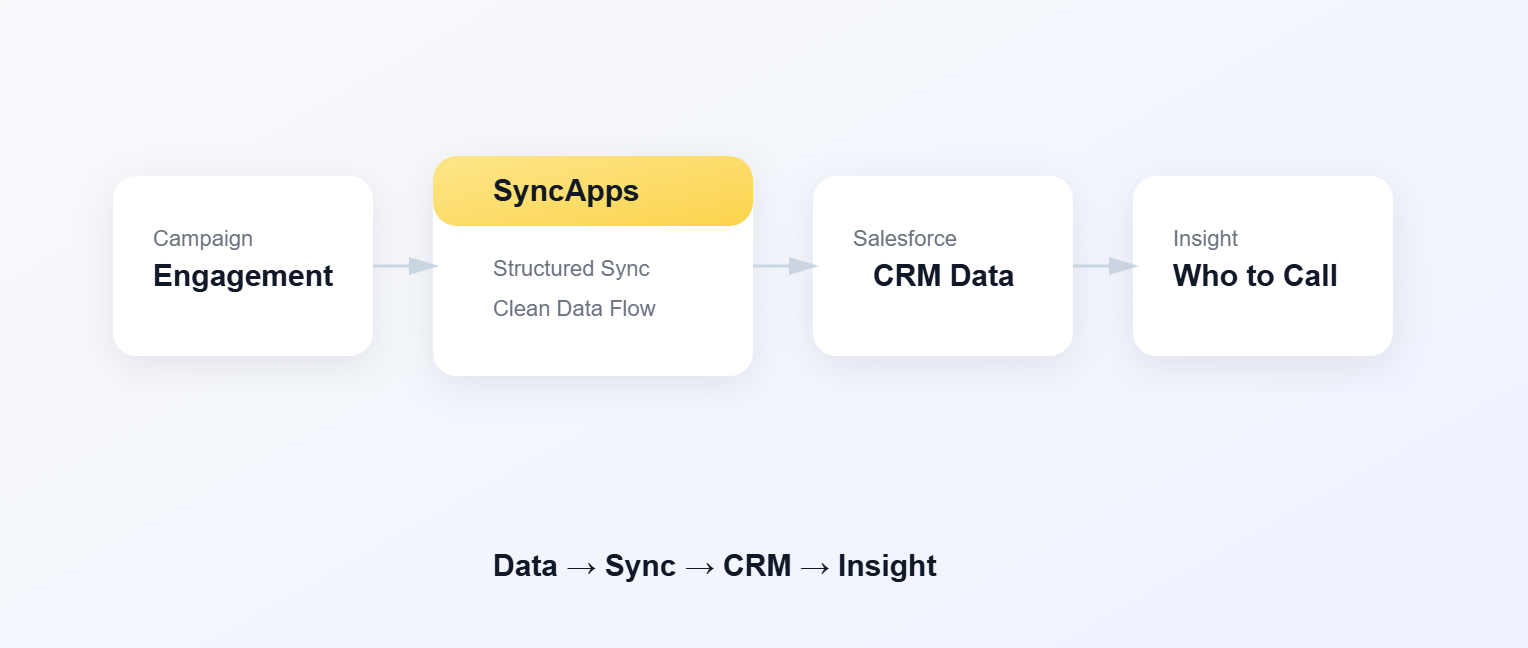
In the past few years, we have simplified SyncApps a lot. It all started with returning to our core mission: to provide an intuitive, effective, and affordable integration solution that grows with your organization without overwhelming you.
The last part is vital.
We recognize that nonprofits don’t have time to sift through a laundry list of options. Instead, we focus on what truly matters — efficient data integration that maximizes your existing tech stack and helps you achieve your goals.
SyncApps is designed to seamlessly connect your favorite tools, whether it’s Salesforce, Mailchimp, or other essential platforms, ensuring you can spend less time on tech headaches and more time making a difference.
Our platform is user-friendly and tailored to the unique challenges nonprofits face, allowing you to easily automate processes and gain insights without needing a PhD in data management.
Specifically, here’s what we did to ensure that happens and it’s not just a series of buzzwords:
- 250+ predefined automations to get you started FAST, in hours, not weeks.
- 24/7 support with real humans. You don’t need an in-house tech department to use SyncApps; you’ve got us in your corner.
- Real flexibility: Salesforce NPSP/NPC is already very complex. If you don’t use all its features (you probably don’t), your SyncApps dashboard will be much less complex — it will have everything you need, nothing more, nothing less.
- Nonprofit-friendly prices: our pricing structure is designed to offer affordable integration. On top of that, all nonprofits get a 25% lifetime discount.
- A network of consultants to help you maximize your ROI. Whether you choose to talk to our team or hire a third-party consultant, we’ve got you covered.
This is the quick story of how we became the preferred integration platform for nonprofits.
Don’t take my word for it (of course, I’m biased!). Join thousands of nonprofits that grow with SyncApps every day — try it for free, what have you got to lose?
Real-Life Nonprofit Success Stories with SyncApps
From UNICEF to tiny local nonprofits, we take great pride in helping the industry thrive, even when the times are challenging.
Get inspired by hundreds of success stories from the nonprofit world — I’m sure there’s a use case or two you can borrow for your own integration strategy.
Conclusion: The Case for Ignoring the ‘Bigger Is Better’ Myth
At the end of the day, it’s time for nonprofits to embrace a new narrative — one that prioritizes practicality over size, efficiency over complexity, and mission over unnecessary features. The “bigger is better” myth should be laid to rest, making room for a more nuanced understanding of what nonprofit tech should look like.